The Kumo Cloud
Projected support, resistance, and balance
Based on “At One Glance” by Grey Rabbit · © Grey Rabbit LLC
At a Glance
- Definition
- The Kumo (cloud) is the area between Senkou Span A and Senkou Span B, displaced forward.
- Key takeaway
- Price above a bullish Kumo favors bullish structure; below a bearish Kumo favors bearish structure — still confirm with lines and Chikou.
- Common mistake
- Treating thin cloud breaks as strong signals without follow-through.
- Live market use
- Compare cloud thickness and twists on Gold, SPY, and DXY charts.
What you will learn
- Explain how Span A and Span B form the Kumo
- Interpret thickness, twists, and future cloud
- Use cloud position as structure — not a standalone forecast
Why it matters
Cloud location is often the first “at one glance” filter on Grey Rabbit charts for Gold, SPY, and DXY.
30-second summary
Span A and Span B project equilibrium forward. Bullish Kumo typically has Span A above Span B; bearish reverses that. Thick clouds imply stronger historical balance zones; twists mark potential regime shifts ahead.
Senkou Span A
((Tenkan-sen + Kijun-sen) / 2), displaced forward 26 periods
Senkou Span A averages Tenkan and Kijun, then projects that value 26 periods ahead to form one edge of the Kumo.
Senkou Span B
(52-period high + 52-period low) / 2, displaced forward 26 periods
Senkou Span B is the midpoint of the highest high and lowest low over 52 periods, projected 26 periods ahead.
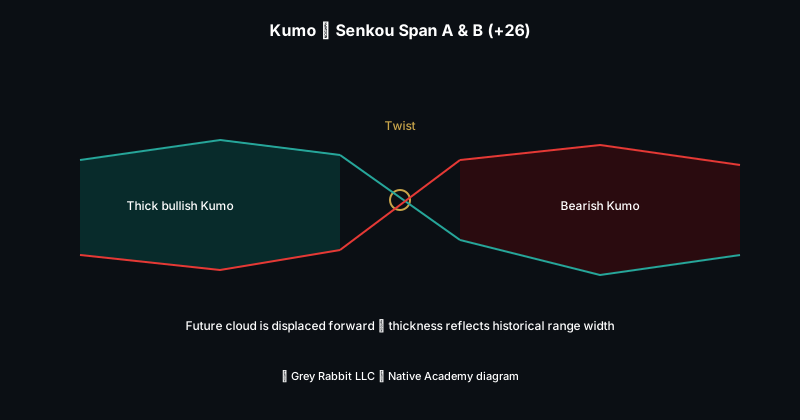
Kumo formed by Senkou Span A and Span B, displaced forward, with a twist zone.
© Grey Rabbit LLC · Native Academy diagram (ebook crop pending when PDF is available)
Bullish and bearish Kumo
A bullish cloud (Span A above Span B) often accompanies constructive medium-term balance. A bearish cloud warns that projected equilibrium favors sellers. Color alone is incomplete without price location.
Thickness and support/resistance
Thick zones reflect wide historical high/low ranges and can slow price. Thin zones break more easily — treat breaks as hypotheses until Chikou and Tenkan/Kijun agree.
Future cloud and twists
Because spans are displaced, you can see tomorrow’s projected cloud today. A Kumo twist (Span A/B cross ahead) flags a potential change in projected balance — still wait for price confirmation.
1. What creates a Kumo twist?
Senkou Span A and Span B crossing, typically visible in the future cloud.
2. Does price above the cloud alone equal Sanyaku Kouten?
No. Full bullish confirmation also considers Tenkan/Kijun relationship, Chikou, and line direction.
Review only — not scored.
Common Mistakes
- Buying every close above a thin cloud
- Ignoring future twists already visible on the chart
Key checklist
- Can define Span A vs Span B roles
- Can describe thickness and twist interpretation